Blog · Behaviour change
The fresh start effect is real. It still won’t save your September resolution
By Jeremy Campbell
Something happens every September. New term, new diary, the first cool morning after a long summer, and suddenly it feels like the ideal moment to become a better version of ourselves. Psychologists have a name for this. It is called the “fresh start effect”: we are far more likely to commit to change straight after a symbolic date, because it lets us draw a line under our old, failed attempts and start again on a clean page. New Year gets most of the credit for this, but September may be the stronger reset of the two, carrying all the emotional memory of new pencil cases and blank exercise books, without January’s bloated, hungover apathy.
I know the feeling well. I have dug the trainers out of the cupboard, announced to my family that from Monday everything was going to be different, and headed out of the door as though three years without running would simply melt away. It did not. I ran five miles on legs that had not run five hundred yards in a very long time, and I could barely walk for a week afterwards.
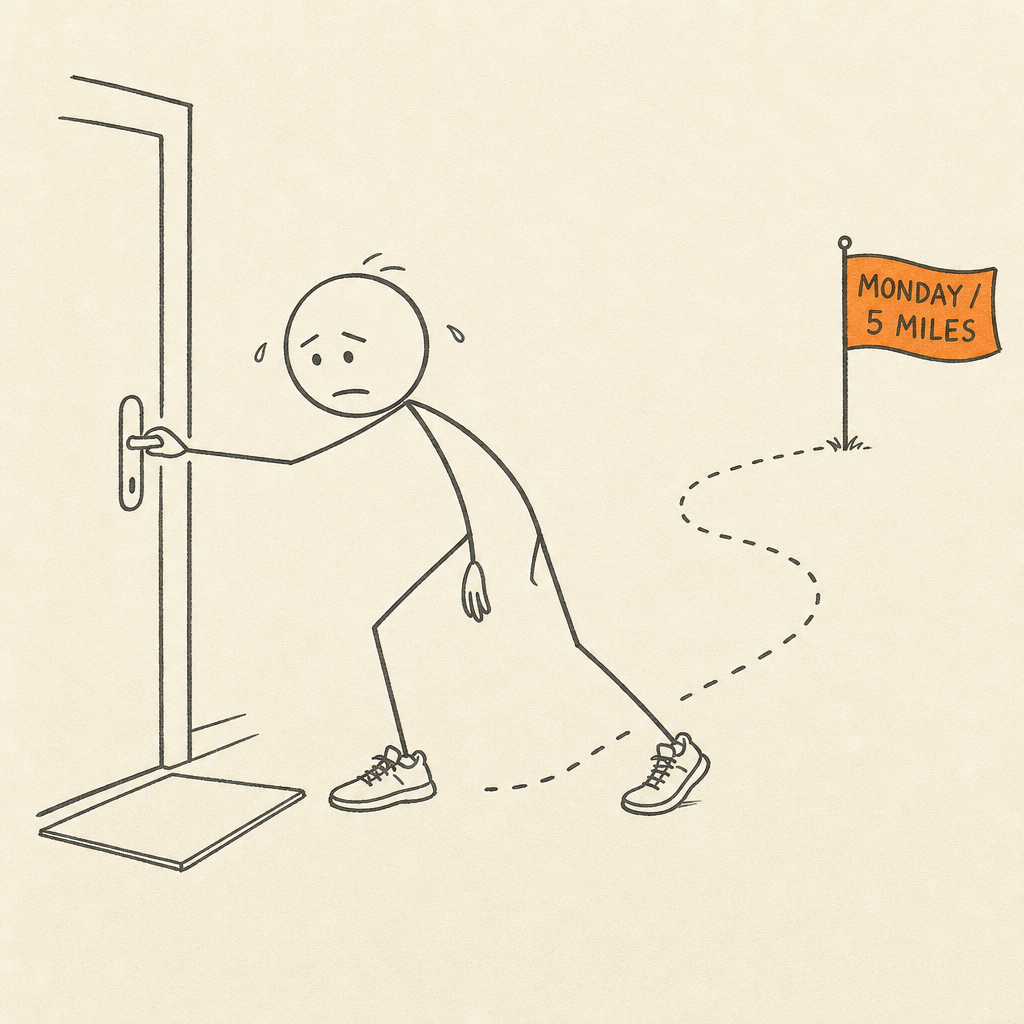
That is the trap hiding inside the fresh start effect. We mistake the decision to change for the change itself. Buying the trainers, downloading the app, writing the plan: that rush of certainty feels wonderful, but it is not progress. It is hope. And hope on its own is usually what kills a September resolution somewhere around the third week of September.
So what actually works? Not more motivation. Motivation is what gets you started, and it is notoriously unreliable about showing up on the days you need it most.
Start instead with who you are trying to become, rather than what you are trying to achieve. “I want to run a 10k” is a target. Hit it, and there is nothing stopping you quietly going back to being someone who does not run. “I am someone who runs” is an identity, and identity survives a bad week in a way a goal rarely does.
From there, build a plan simple enough to survive contact with a busy Tuesday, and act on it in small, boring, repeatable ways. Twenty minutes walked every day for a fortnight will do more for you than one heroic five mile run followed by a week recovering on the sofa. Consistency, not intensity, is what actually builds a habit.
Tell someone what you are trying to become and ask them to be honest about how it is really going. That honesty is uncomfortable, but it is what lets you adjust the plan before you quietly abandon it. Then do the least glamorous part of all: go again. And again. Most of us badly underestimate how many times round that loop it actually takes.
Do that for long enough and the version of you who runs, or writes, or shows up differently at work, stops feeling like an experiment. It simply becomes who you are.